

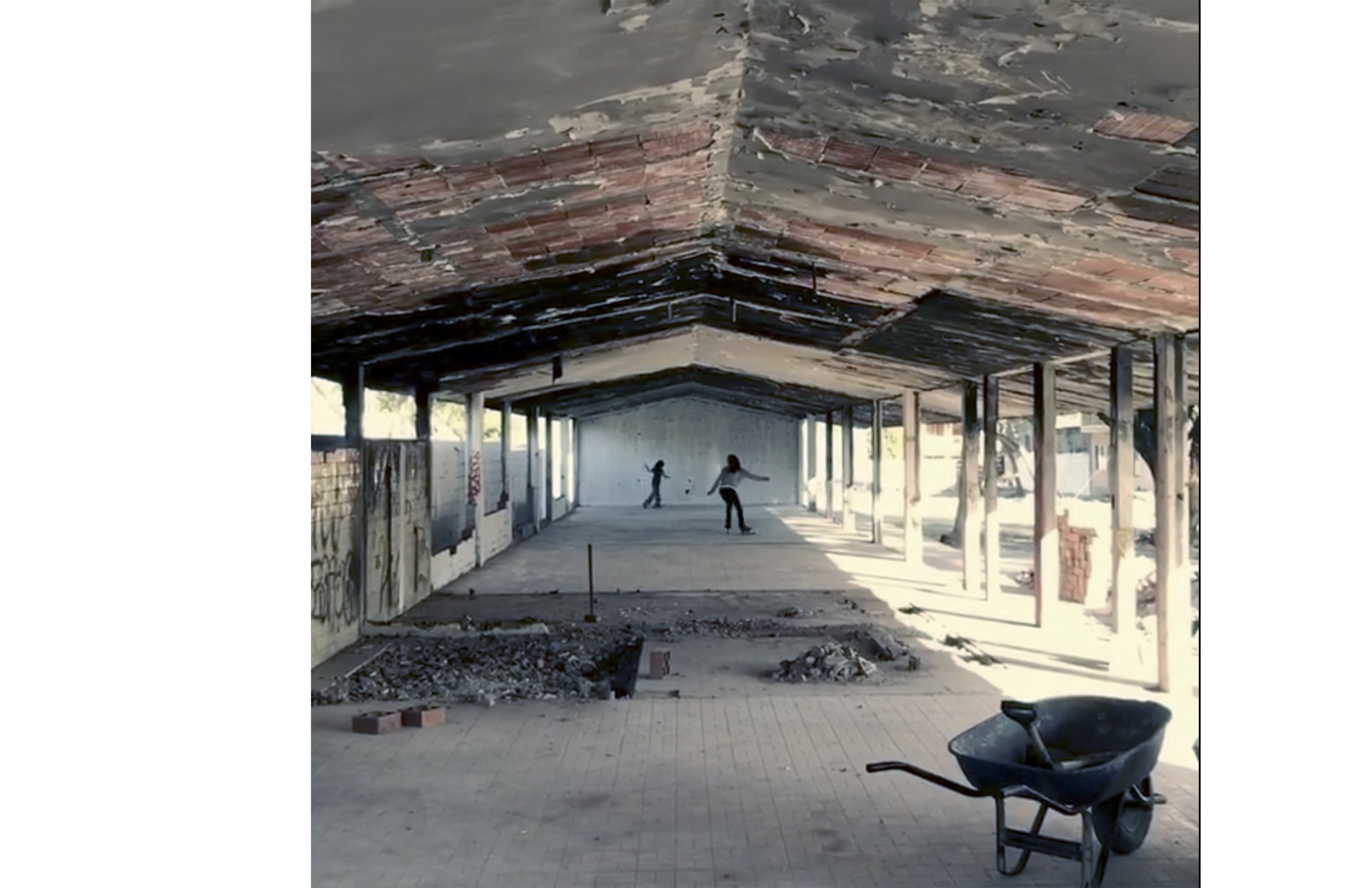
Over a two-year participatory design phase, we conducted a series of community exercises to map the social memory of an abandoned elementary school near Monterrey’s city center.
Our research delved into the neighborhood's complex relationship with the site, from the nostalgic heritage of former students to the stark reality of its abandonment.
Acknowledging the building's state of 'abandonment' as a legitimate stage in its timeline, our intervention avoids erasure, instead creating a possibility of change that bridges the gap between the neighborhood's nostalgic past and its contemporary needs.The resulting adaptive reuse strategy honors every historical layer of the building. By treating the structure's past not as a relic but as a foundation, the design facilitates a spatial evolution that ensures the community remains the primary protagonist of its future.
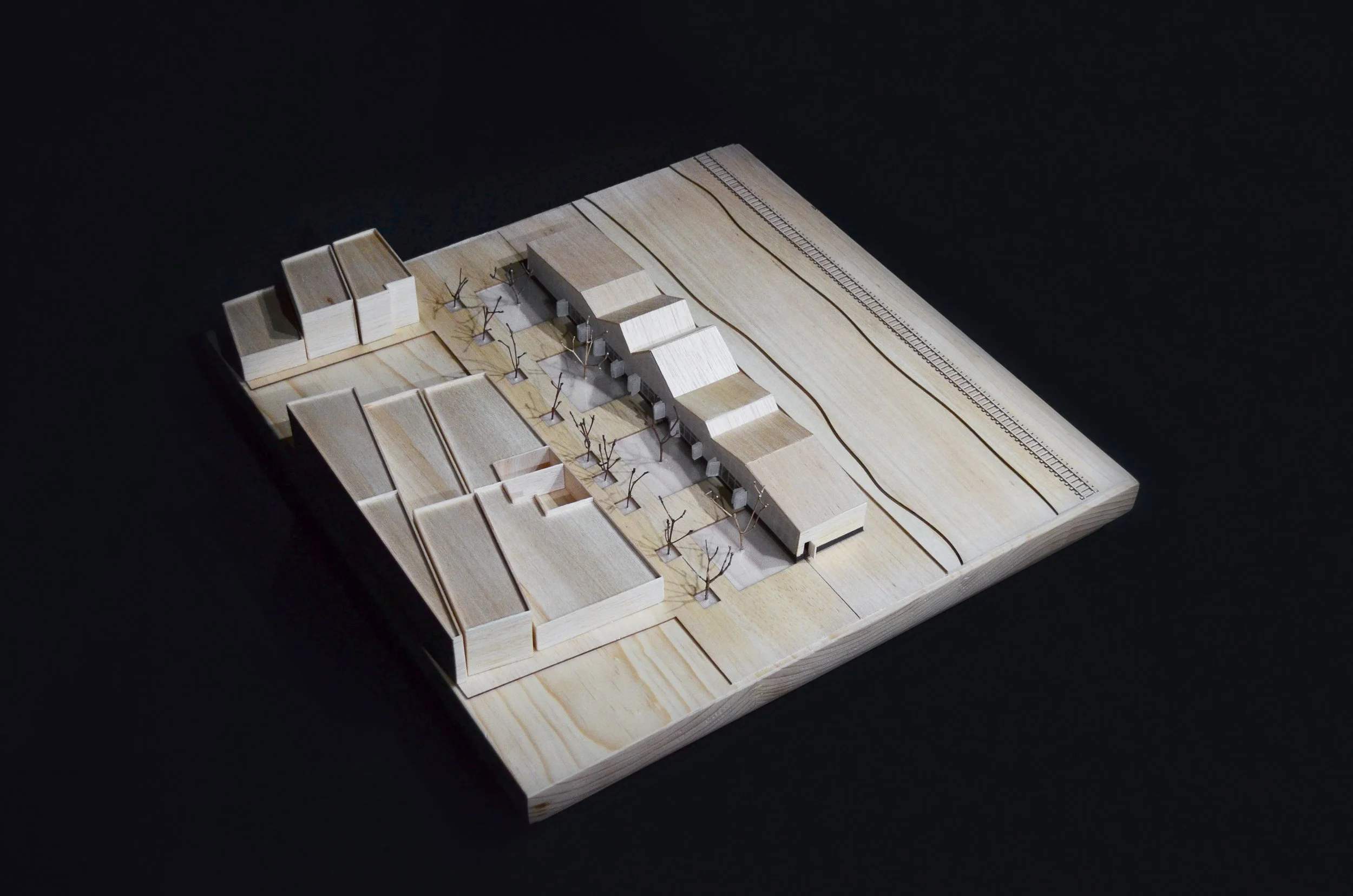

The architectural intervention is defined by a high-contrast envelope strategy: a steel mesh outer shell that wraps the existing structure without making physical contact. This 'protective veil' acknowledges the building’s palimpsest of history, safeguarding the original brick ruin while maintaining full visual transparency.
Internally, the original spatial hierarchy is preserved; the former classroom segmentations remain intact, allowing the building's past to be a part of the new program.

