

Casa Ocho Vigas
Exhibited:
Brutalismo en México exhibition at Museum of Modern Art, Mexico City 2023
Media mentions:
Metropolis Magazine
Location: Monterrey, México
Recognitions:
Finalist: Oscar Niemeyer Prize for Latin American Architecture 2020
Winner: Bienal de Arquitectura de Nuevo León, category: house over 450m2
Year built:
2019
Designing for Shade
In the arid climate of Northern Mexico, the traditional modernist focus on sunlight is reimagined through a continuous search for shade. At Casa Ocho Vigas, sun protection is not just a feature; it is the fundamental guideline of the entire architectural program.
The project began with a site-specific discovery: a two-hundred-year-old native Huizache tree. Its natural canopy became the primary axis for the main entrance and all subsequent site decisions. This organic shade integrates with the house’s structural concrete beams, creating a cool, shaded vestibule that doubles as a functional outdoor leisure space.
To combat the intense summer heat of Monterrey, we designed a central courtyard—the most vulnerable area of a home—around a mature Elm tree. This natural cooling strategy extends the livable areas of the house, allowing for comfortable outdoor play and recreation even during the peak summer months. By prioritizing passive solar design and local flora, the house achieves a high level of thermal comfort and energy efficiency.
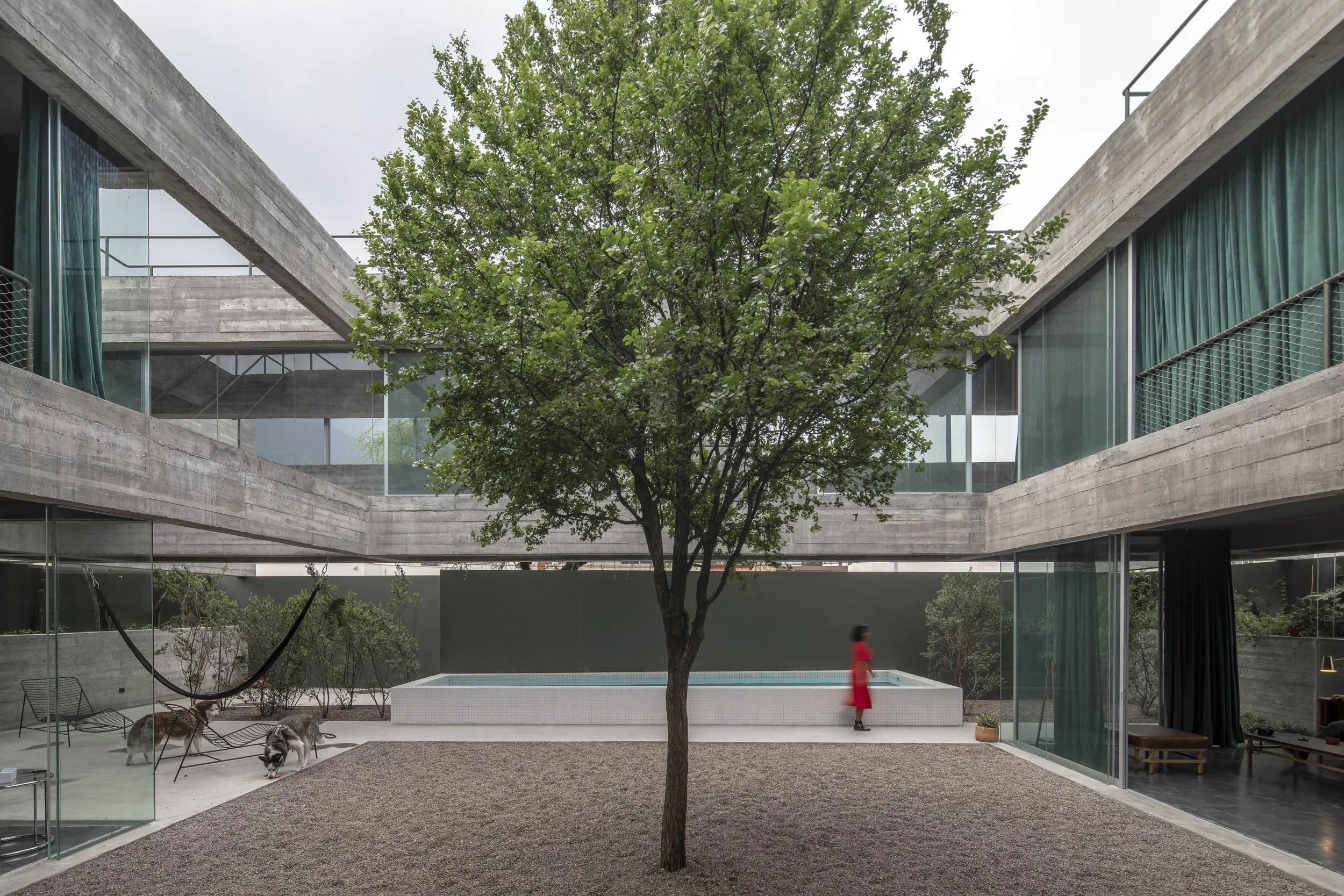
The architectural layout of Casa Ocho Vigas is strategically oriented to harness regional wind patterns. By integrating advanced cross-ventilation systems, the design promotes natural airflow throughout the residence, significantly enhancing thermal comfort while minimizing energy consumption. This bioclimatic approach ensures a high-performance home that remains cool in the arid climate of Northern Mexico without over-reliance on HVAC systems.
By strategically reducing the building's footprint to 50% of the lot, Casa Ocho Vigas maximizes permeable surfaces and green space. This conscious site planning consolidates a high-performance absorption area across the central courtyard, perimeter, and exterior gardens. Expansive windows along the perimeter and inner courtyard ensures that every interior space is flooded with natural indirect light, creating a seamless indoor-outdoor connection while minimizing heat gain.
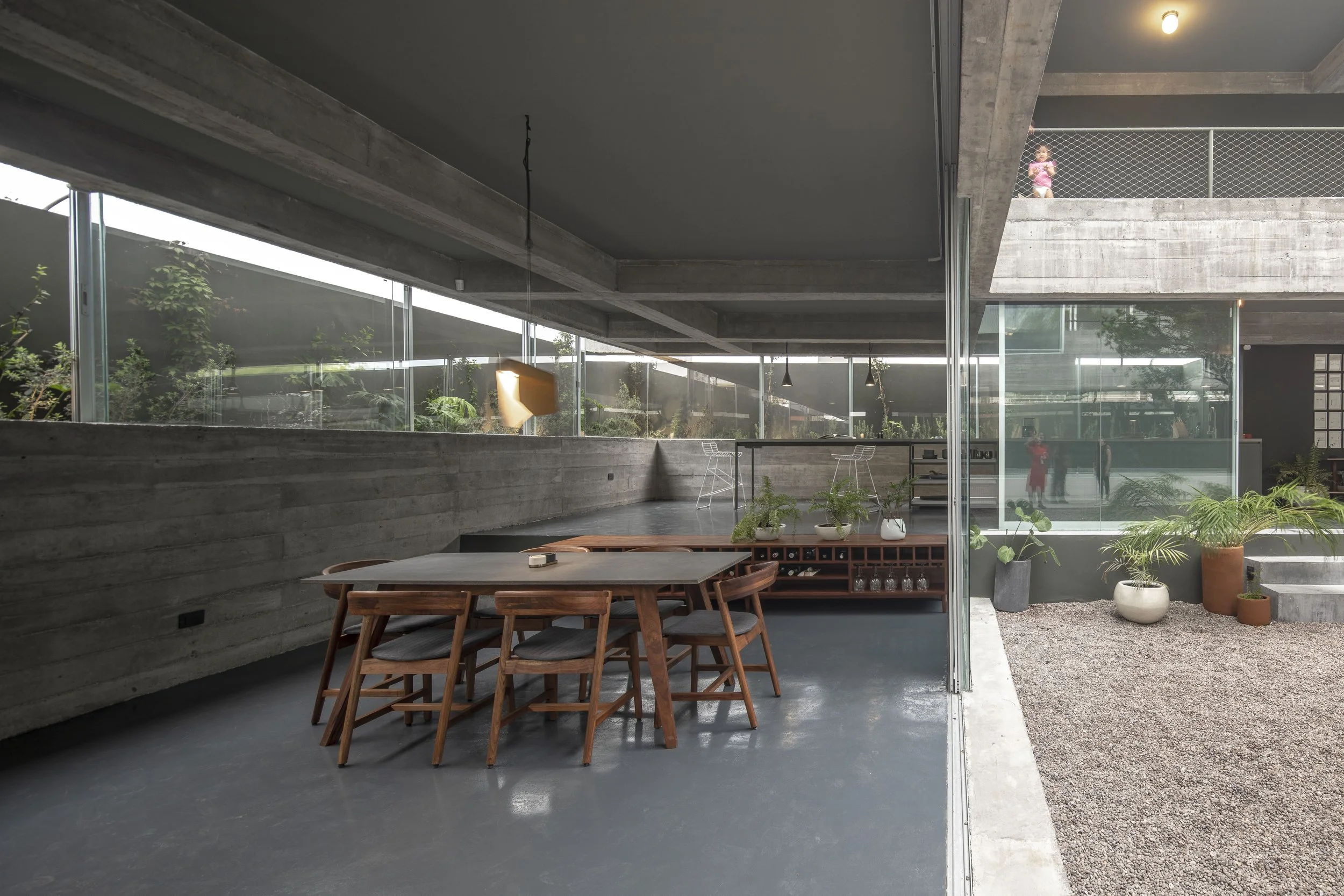


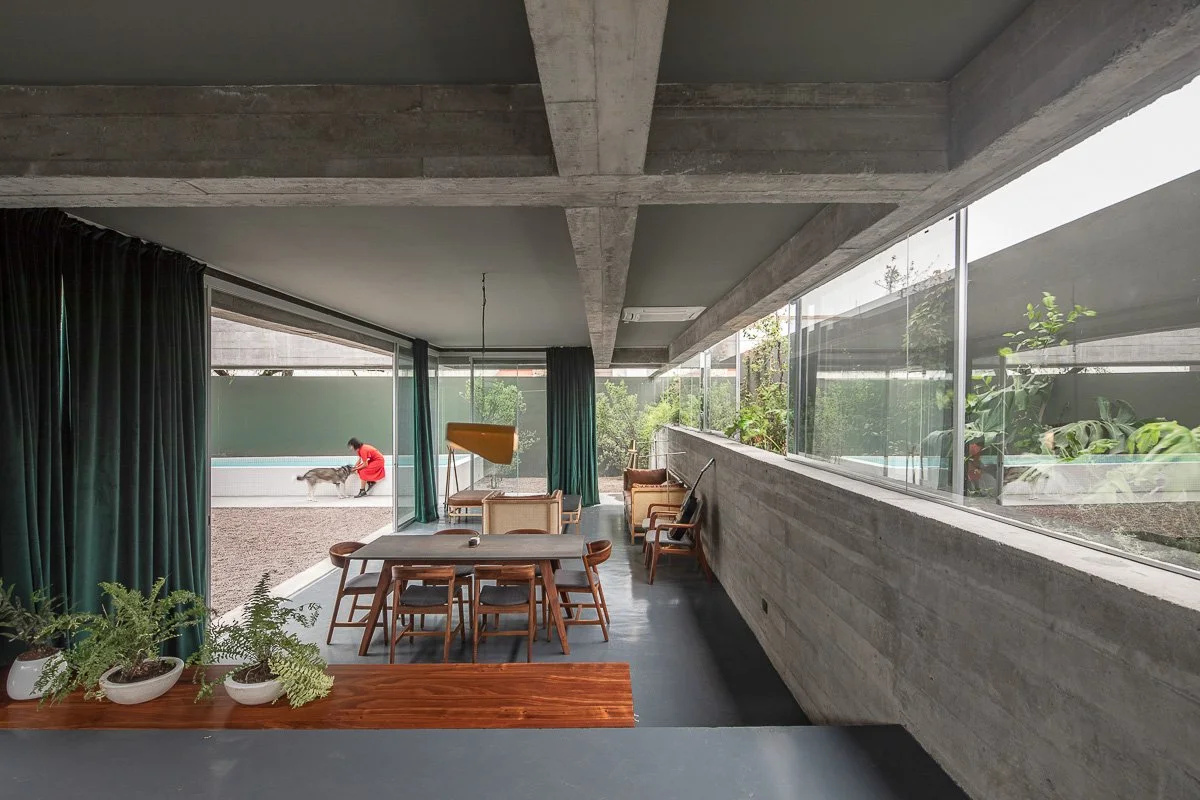
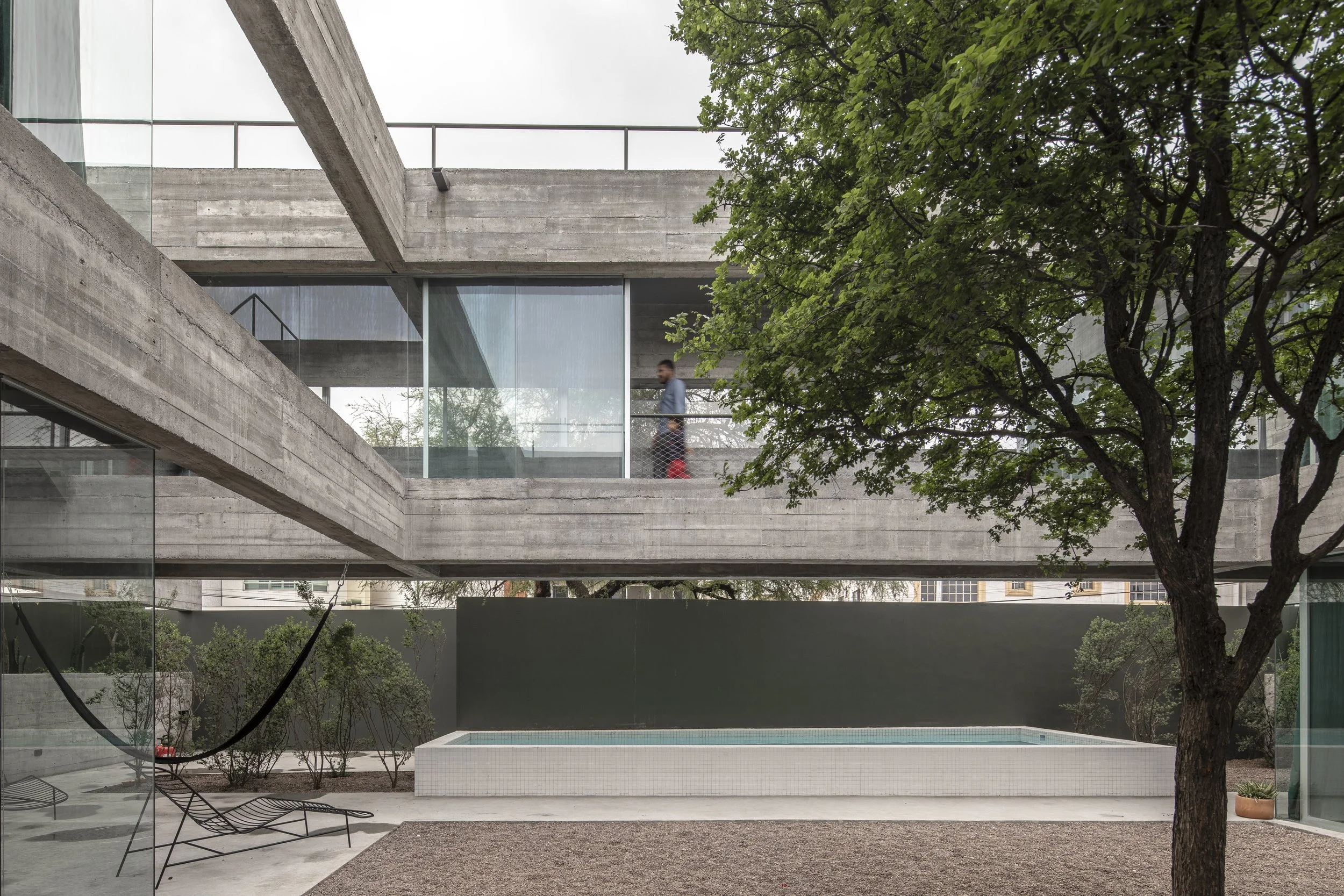


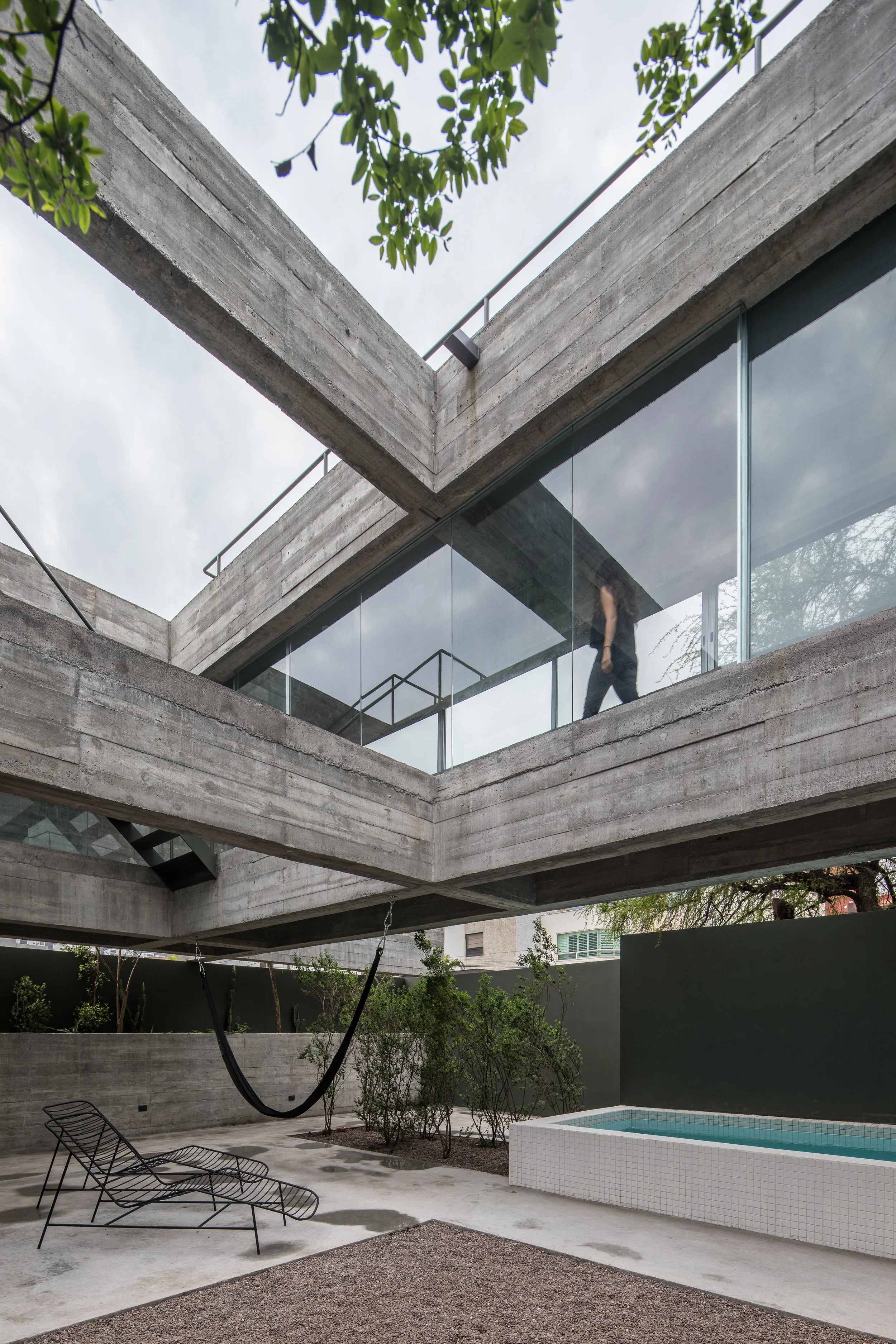
The spatial logic of Casa Ocho Vigas is defined by its exposed concrete skeleton. This rhythmic grid of beams serves as the primary structural and aesthetic framework, precisely tracing the architectural plan and anchoring to the site’s perimeter. By strategically positioning the primary supports at the extreme corners, a near-invisible integration of the load-bearing elements was achieved. This cantilevered effect creates a dramatic visual paradox, allowing the upper level to appear as if it is floating over the landscape, offering tectonic clarity and structural honesty.
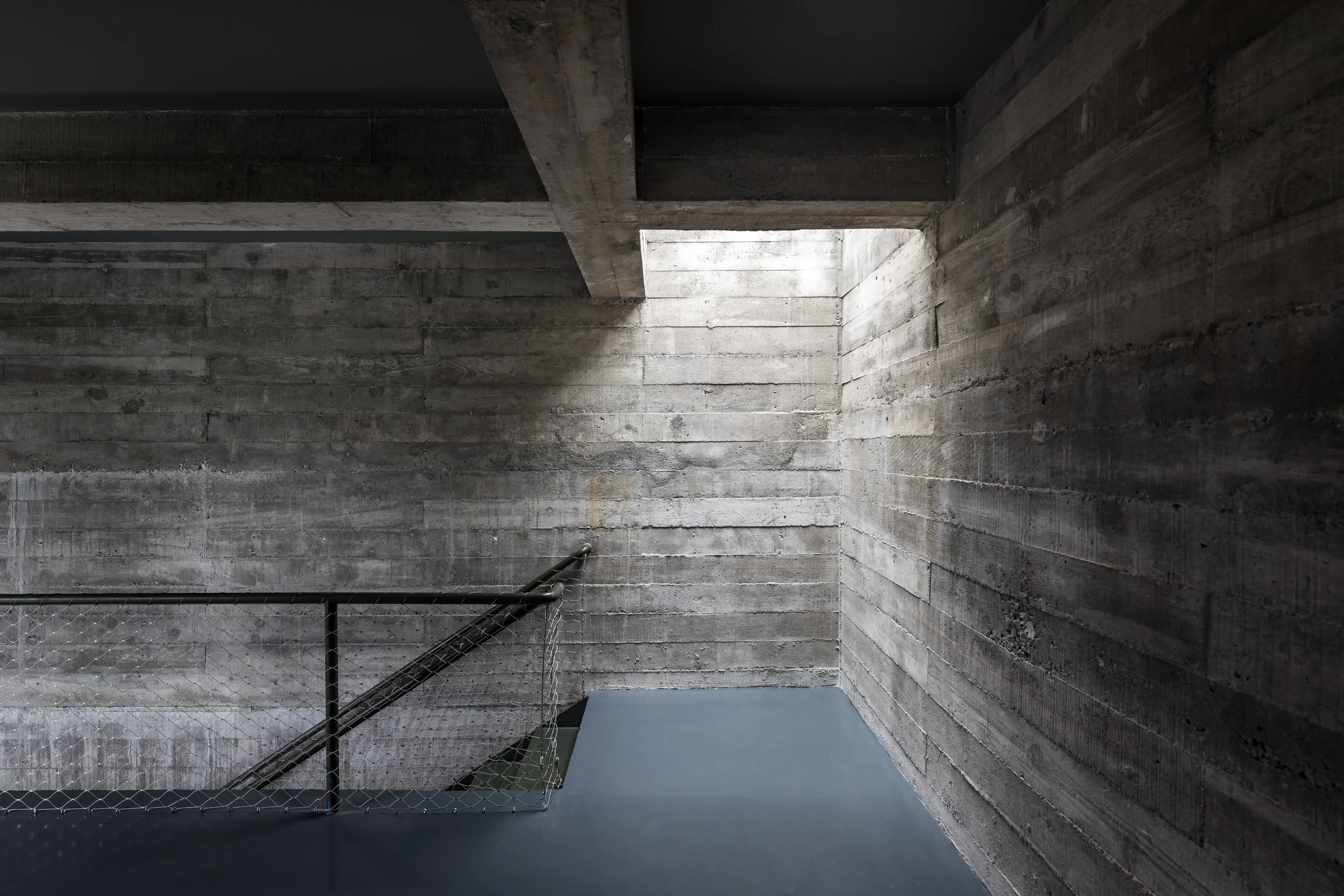
The choice of exposed concrete establishes a raw, timeless identity for Casa Ocho Vigas. The material’s intentional roughness evokes a dual narrative: a structure that feels permanently 'in-progress' yet simultaneously destined to become a refined ruin. This materiality allows the residence to merge seamlessly with the jagged topography of the Sierra Madre mountains. By prioritizing raw textures, the house transcends temporary trends, becoming a permanent fixture of the Northern Mexico landscape.